
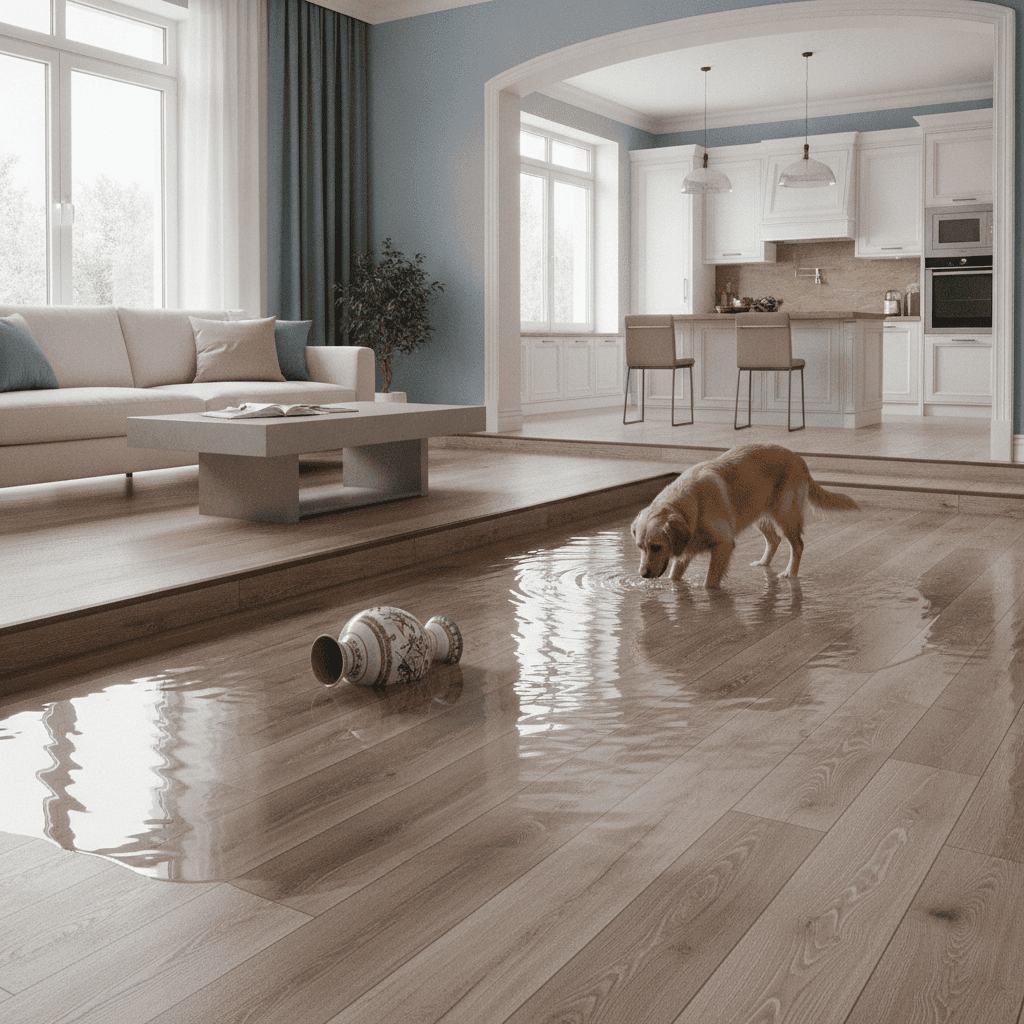
Protecting our homes from the elements is a continuous effort. Water damage can sneak in quietly, causing significant issues before we even realize it. From burst pipes to everyday spills, moisture poses a constant threat to floors, walls, and even our home’s structural integrity.
I have seen firsthand how quickly a small leak can turn into a big problem. This is why investing in preventative measures matters so much. Strategic choices, like installing waterproof flooring, can be a game-changer for safeguarding your living space.
Selecting the right flooring means thinking ahead. It means choosing materials that can stand up to moisture, spills, and humidity without compromising on style or comfort. This approach helps us protect our investment and maintain a healthy environment for our families.
Understanding the Threat of Water Damage to Your Home
Water damage is a homeowner’s nightmare. It starts small sometimes, like a dripping faucet under the sink. Other times, it hits hard and fast, such as from a flooded basement or an overflowing washing machine. These incidents do more than just make a mess.
The consequences of water damage extend far beyond wet floors. Standing water can quickly lead to mold and mildew growth. This causes unpleasant odors and creates unhealthy air quality. Mold spores can spread throughout a house, triggering allergies and respiratory problems for residents.
Beyond health concerns, water can weaken a home’s structure. It can warp wooden subfloors, rot joists, and damage drywall. This compromises the stability of your home. It often requires costly and extensive repairs. I have learned that prevention is always much better and more affordable than dealing with the aftermath.
Unchecked moisture can also ruin insulation, damage electrical systems, and destroy personal belongings. The cumulative effect of these issues can significantly decrease a home’s value. It can also create a stressful living environment. This is why having a strong defense against water is so crucial.
The Core Benefits of Choosing Waterproof Flooring
Waterproof flooring offers many advantages that go beyond simply resisting water. It provides an enhanced level of protection for your home. This type of flooring is engineered to repel water, so liquids cannot penetrate the surface or seep into the subfloor.
One of the biggest benefits is its incredible durability. These floors are built to withstand heavy foot traffic and daily wear and tear. They resist scratches and dents, so they look new for a longer time. This durability means less worry about accidental damage from pets or kids.
Cleaning and maintenance are also incredibly easy with waterproof floors. Spills can be wiped up quickly without leaving stains or watermarks. This makes them a practical choice for busy households. The surface repels dirt and grime, so it simplifies routine cleaning tasks.
Waterproof flooring also contributes to a healthier indoor environment. Because it resists moisture absorption, it significantly reduces the risk of mold and mildew growth. This is a huge benefit for anyone concerned about indoor air quality and allergies. It creates a cleaner space for everyone.
Beyond Just Spills: Long-Term Protection
Many people think of waterproof flooring only for immediate spills. But its real value lies in its long-term protection. It acts as a barrier against humidity and vapor. This prevents moisture from seeping into the subfloor over time. This is especially important in humid climates or in rooms where moisture levels fluctuate.
This enduring protection helps preserve the structural integrity of your home. It prevents costly damage that can result from undetected moisture problems. We all want our homes to last, and waterproof floors help ensure that foundation remains strong for years to come.
Investing in Your Home’s Future
Choosing waterproof flooring is a smart investment in your home’s future. It increases property value because it offers a practical and appealing feature to potential buyers. The peace of mind it provides, knowing your home is better protected, is truly invaluable.
The variety of styles and designs available means you do not have to sacrifice aesthetics for functionality. You can find options that mimic the look of natural wood, stone, or tile. This lets you create a beautiful and protective floor that fits your home’s decor perfectly.
Identifying Key Areas for Strategic Waterproof Flooring Installation
Placing waterproof flooring in the right spots maximizes its protective benefits. We want to target the areas that face the highest risk of water exposure. This means thinking about where spills, splashes, or humidity are most common.
Bathrooms are an obvious choice. Water is everywhere in a bathroom, from showers and tubs to sinks and toilets. Regular splashes and humidity can quickly damage non-waterproof materials. Installing waterproof flooring here prevents warping, mold, and rot.
Kitchens also see a lot of moisture. Cooking involves water, and spills are common. A waterproof floor in the kitchen can easily handle dropped ice cubes, overflowing pots, or leaky dishwasher hoses. It maintains its look and integrity even after countless minor incidents.
Laundry rooms are another high-risk area. Washing machines can leak, and utility sinks often overflow. A waterproof floor keeps these accidents from spreading and causing expensive damage to adjacent rooms or the floor below. It gives me confidence that small issues will not become big problems.
Basements are prone to dampness and occasional flooding, making them an ideal location for waterproof flooring. It helps prevent mold and mildew growth in these often-humid spaces. Entryways also benefit greatly because they catch melted snow, rainwater, and tracked-in mud. I have found that you can discover the best rooms for waterproof flooring to suit your specific needs by considering these key areas.
Popular Types of Waterproof Flooring and Their Advantages
The market offers several excellent waterproof flooring options. Each type brings its own set of benefits and aesthetic appeals. Understanding these choices helps homeowners make informed decisions for their specific needs and budgets.
Luxury Vinyl Plank or Tile, often called LVP or LVT, is a highly popular choice. It combines durability with realistic aesthetics. These floors are made from multiple layers, including a waterproof core, and they come in designs that mimic natural wood or stone. Installation can be a floating system, so it is often easier for DIY enthusiasts.
Waterproof laminate flooring has also seen significant improvements. Older laminates were notorious for swelling when exposed to water. Modern waterproof versions feature enhanced cores and sealed edges that prevent moisture penetration. They offer the look of hardwood at a more accessible price point.
Ceramic and porcelain tiles are inherently waterproof. They have been a traditional choice for bathrooms and kitchens for a long time. These tiles are incredibly durable and come in an endless array of colors, patterns, and sizes. The grout used between tiles does need to be sealed, but the tiles themselves are impervious to water.
Engineered hardwood with a waterproof core is a newer option. It gives you the authentic beauty of real wood with advanced water resistance. These floors have a genuine wood veneer over a waterproof core, so they are suitable for areas where traditional hardwood would not be recommended.
LVP and LVT: A Versatile Choice
LVP and LVT stand out for their versatility. They offer a comfortable feel underfoot, which is different from the hard surface of traditional tile. The click-lock installation systems often make them a favorite for homeowners who like to tackle projects themselves. I find the variety of styles, from rustic wood grains to modern concrete looks, really impressive.
These floors are also warm to the touch and can be installed over existing subfloors with minimal preparation. Their resilience makes them a smart choice for busy family homes, because they absorb impact and resist daily wear. They simply offer a great combination of practicality and style.
The Resurgence of Waterproof Laminate
Modern waterproof laminate is not your grandmother’s laminate. Manufacturers have developed innovative technologies to make these floors truly water-resistant. This includes water-repellent coatings and core boards that prevent swelling. It means homeowners can now enjoy the classic look of laminate without the worry of moisture damage.
I appreciate how far laminate has come. It now provides an affordable and attractive alternative to more expensive flooring types. It is an excellent option for areas like mudrooms and hallways where some moisture might be tracked in from outside.
Installation Tips for Maximizing Waterproofing Effectiveness
Proper installation is just as important as choosing the right waterproof flooring. A flawless installation ensures the flooring performs as intended. It forms a reliable barrier against moisture.
First, the subfloor must be clean, dry, and level. Any imperfections in the subfloor can affect the stability and integrity of the new flooring. I always recommend patching any holes or cracks. You should also ensure the subfloor is completely dry before beginning. Moisture lingering underneath can still cause problems.
Using a high-quality moisture barrier or underlayment is often a critical step, especially in basements or on concrete slabs. This extra layer provides an additional defense against vapor transmission. It further protects your investment. Some waterproof flooring comes with an attached underlayment, so always check product specifications.
For tile installations, selecting the correct waterproof membrane and grout is essential. The membrane creates an impermeable layer beneath the tiles. Using a high-quality, mold-resistant grout with appropriate sealant ensures no water seeps through the tiny gaps. This is a detail that cannot be overlooked.
Always follow the manufacturer’s specific instructions for installation. Each product might have unique requirements for acclimation, adhesive use, and seam sealing. Cutting corners during installation can compromise the floor’s waterproofing capabilities. It often leads to disappointing results down the road.
Paying close attention to edges and perimeters is also crucial. Use waterproof trim and sealants around baseboards, doorframes, and other transition areas. This prevents water from running off the floor and seeping into the walls or surrounding areas. A professional installation often provides the best results for peace of mind.
Maintenance and Care for Lasting Waterproof Performance
Maintaining your waterproof flooring correctly ensures its longevity and keeps it looking great. While these floors are designed to be resilient, a few simple care routines can extend their life even further. Regular cleaning is the cornerstone of good maintenance.
I find that sweeping or vacuuming daily removes loose dirt and debris. This prevents scratches and keeps the surface clean. For deeper cleaning, a damp mop with a mild, pH-neutral cleaner works wonders. Avoid excessive water, even on waterproof floors. It is best to stick to damp cleaning.
Promptly cleaning up spills is another crucial step. Although waterproof, leaving liquids to sit for extended periods can still potentially damage subfloors or surrounding areas if they find a way to seep under the planks or tiles. A quick wipe with a cloth is usually all it takes to address most spills.
Avoid harsh chemicals, abrasive cleaners, or steam mops, as they can damage the top protective layer of the flooring. Always use cleaning products recommended by the flooring manufacturer. This preserves the finish and ensures the waterproofing remains effective. Following these guidelines keeps your floor looking its best.
Regularly inspect your floors for any signs of wear, especially in high-traffic areas. Look for lifting edges, damaged grout, or any other issues that could compromise the waterproof barrier. Addressing these small problems early prevents them from escalating into larger, more expensive repairs.
Using felt pads under furniture legs and placing doormats at entryways also helps prevent damage. These small actions contribute to keeping your floors in excellent condition. This ensures they continue to protect your home effectively.
Conclusion: Secure Your Sanctuary with Smart Flooring Choices
Making smart decisions about your home’s flooring is more than just about aesthetics. It is about practical protection and long-term value. Strategic waterproof flooring offers a powerful defense against the constant threat of water damage. I have seen how much peace of mind comes from knowing your floors can handle whatever life throws at them, from everyday spills to unexpected accidents. The durability, easy maintenance, and hygienic properties of these modern materials make them an excellent choice for any homeowner looking to upgrade their living space. They safeguard your health by preventing mold and protect your home’s structure from costly repairs. Choosing waterproof options for high-risk areas like kitchens, bathrooms, and basements is a wise investment. It helps ensure your home remains a safe and beautiful sanctuary for years. I encourage you to explore the many stylish and effective waterproof flooring options available. Take action to secure your home today.


